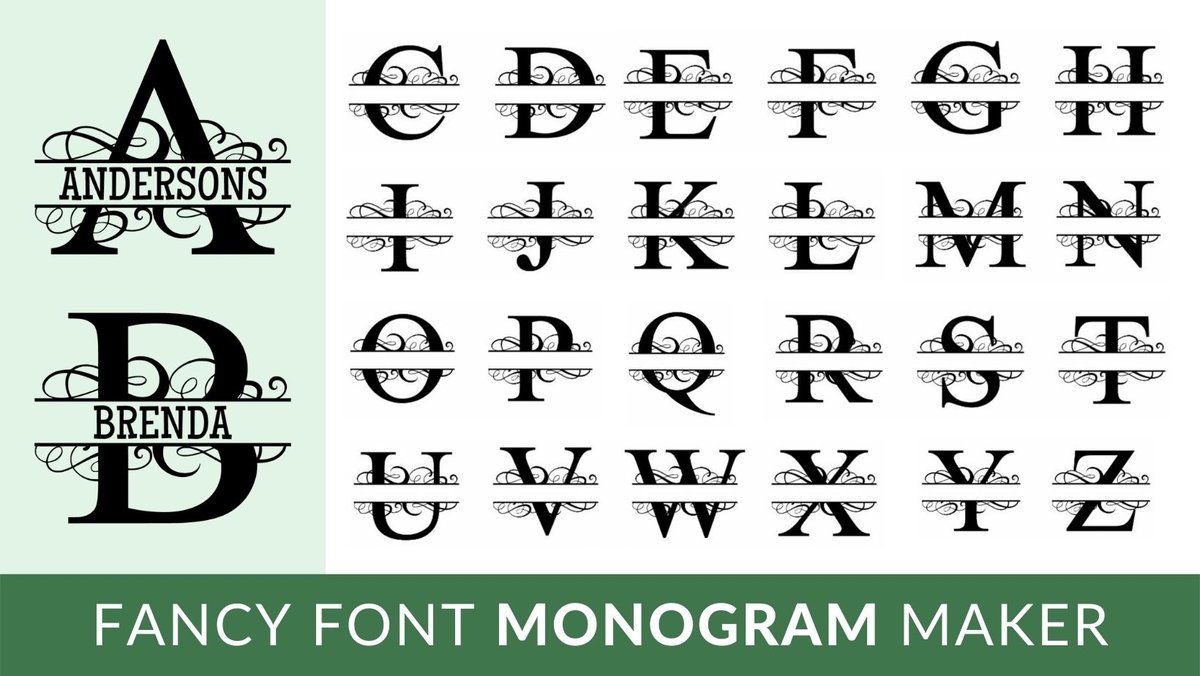
Crafting a monogram is more than just arranging initials; it’s an art form, a statement of identity, and a touch of timeless personalization. Whether for yourself, a beloved couple, or a family, a well-chosen monogram adds character and distinction to everyday items and cherished keepsakes alike. But with various styles, rules, and printing methods, it's easy to feel a bit overwhelmed.
This guide cuts through the confusion, offering the Best Practices for Using and Printing 3-Initial Monograms. We'll demystify the rules, help you choose the perfect style, and equip you with the knowledge to bring your unique design to life with confidence.
At a Glance: Your Monogramming Essentials
- What is it? A typographic design connecting initials, often within a decorative border, representing a person, couple, or family. 3-initial monograms are the most popular.
- Two Main Styles:
- All Same Size (Block): Initials in sequential order (First, Middle, Last). Primarily for personal use.
- Center Initial Larger: Initials ordered as First, Last (larger), Middle for personal monograms (especially women's items), or specific arrangements for couples.
- Personal Monogram Order:
- All Same Size: First, Middle, Last (e.g., BHF for Betsy Hope Friedman).
- Center Larger: First, Last (larger), Middle (e.g., BFH for Betsy Hope Friedman).
- Couple Monogram Order (Shared Last Name, Center Larger):
- Rule 1 (The Stationery Studio): Woman's First, Shared Last (larger), Man's First (e.g., J G R for Julie and Robert Gold).
- Rule 2 (Customily): First (Husband/Wife), Shared Last (larger), First (Wife/Husband) (e.g., M B F for Mary and Frank Burns).
- Beyond 3-Letters: Options exist for single initials, two-letter monograms, or if a middle name is absent.
- Style Matters: Traditional monograms (interlocking, curly scripts) suit classic items like linens; modern monograms (contemporary look) fit jewelry and tech.
- Printing Techniques: Embroidering, engraving, digital printing (print-on-demand, sublimation), hand stamping, and laser cutting all offer different finishes for various items.
- Ultimately: Personal preference is key. There's no single "right or wrong" way.
Unpacking the 3-Initial Monogram: A Foundation for Personalization
Before we dive into specific rules, let's establish a common understanding. A monogram is essentially a stylized representation of initials, expertly intertwined or framed within a decorative element. While monograms can feature one or two letters, the three-initial format stands out as the most widely embraced, offering a rich canvas for design and personal expression.
These multi-letter designs fall into two primary categories based on letter sizing:
- All Same Size (Block Monogram): As the name suggests, all three initials are rendered in the same font size, typically arranged linearly. This creates a clean, balanced, and often more understated look.
- Center Initial Larger: This popular style emphasizes the central initial by making it noticeably larger than the two flanking initials. This visual hierarchy often draws the eye, making the central letter a focal point.
Understanding these foundational styles is your first step towards making informed choices about the aesthetic and meaning you wish to convey with your monogram.
Mastering Your Monogram: Crafting Personal 3-Initial Designs
Personal monograms are all about celebrating individual identity. When you're designing a monogram solely for yourself, the order of your initials is crucial, and it changes depending on the style you select.
The All-Same-Size Block Monogram: Simplicity and Clarity
When opting for the classic block monogram where all three letters are the same size, the rule is straightforward:
- First Name Initial, Middle Name Initial, Last Name Initial (F-M-L)
Think of it as simply writing your initials in sequential order. For example, if your name is Betsy Hope Friedman, your monogram would be BHF. This style is timeless and clear, making it a popular choice for a wide array of personal items, from stationery to professional accessories.
The Larger Center Initial: A Touch of Distinctive Flair
This style is particularly popular for personalizing women's items, lending an elegant and traditional feel. With a larger center initial, the order shifts to highlight your last name:
- First Name Initial, Last Name Initial (larger), Middle Name Initial (F-L-M)
So, for Betsy Hope Friedman, her larger center initial monogram would be BFH. The "F" for Friedman proudly takes center stage, flanked by "B" for Betsy and "H" for Hope. This creates a visually appealing focal point that immediately communicates your family name.
What if There's No Middle Name?
Not everyone has a middle name, and that’s perfectly fine! Monogramming is adaptable. If you lack a middle name:
- Opt for a 2-initial monogram: Combining your first and last initials is a popular and elegant solution.
- Use a second surname: Common in some cultures, like Hispanic culture, where individuals might have two last names. You could incorporate the initial of a second surname as your "middle" initial for a three-letter monogram, or use it to form a two-letter design.
Remember, the goal is personalization, so feel free to choose the option that best reflects your identity.
Uniting Identities: Navigating Couple's 3-Initial Monograms
Couple's monograms are a beautiful symbol of unity, merging two individual identities into a shared emblem. The rules here are a bit more nuanced, especially when it comes to the order of initials. A general guideline across all couple's monograms is that the wife's name and initial traditionally come first on imprints and are placed on the left in monograms.
The Classic Married Couple Monogram (Shared Last Name)
When a married couple shares a last name, the three-letter monogram with a larger center initial is the most popular choice, typically featuring the shared last initial in the middle. However, you'll find two prominent "rules" regarding the order of the first names:
- Rule 1 (As per The Stationery Studio):
- Woman's First Initial, Shared Last Name Initial (larger), Man's First Initial.
- Example: For Julie and Robert Gold, the monogram would be J G R. Julie's initial is on the left, Robert's on the right, and their shared 'G' for Gold is prominently displayed in the center.
- Rule 2 (As per Customily):
- First Initial, Shared Last Name Initial (larger), First Initial. This formula applies to both husband and wife, as well as same-sex couples sharing one last name, placing the shared last initial centrally.
- Example: For Mary and Frank Burns, this rule would result in M B F. Similarly, if it were two individuals like Alex and Ben Carter, it would be A C B or B C A, depending on whose initial you prefer to put first.
Which rule should you follow? This is where personal preference truly comes into play. Both are widely accepted. Discuss with your partner which order feels most representative of your shared identity.
Other Options for Couples with a Shared Last Name
Beyond the 3-initial larger center style, couples sharing a last name have other elegant options:
- Single-Letter Monogram: Simple and classic, using only their shared last initial (e.g., G for Gold). This is often seen on larger home decor items or towels.
- Two-Letter Monogram: Combine their two first initials (e.g., J R for Julie and Robert). This creates a balanced look without emphasizing a particular name.
- Hyphenated Last Names: If the couple has a hyphenated last name, a hyphen can be gracefully incorporated into the monogram's design, often between the two last initials or within a custom typeface.
When Last Names Differ: Celebrating Individual Identities
For couples who choose to retain their individual last names, a 2-letter monogram often works best. This elegant solution combines each of the couple's last name initials.
- Combining Last Name Initials: For Sarah Evans and Michael Jones, the monogram might be E J or J E.
- Decorative Elements: These types of monograms often feature decorative elements like ampersands (&) or plus signs (+) to visually link the initials, creating a cohesive design that celebrates both individuals. For instance, S & M or E + J.
This approach gracefully acknowledges each person's identity while still symbolizing their union.
The Art of Style: Traditional vs. Modern Monograms
The style you choose for your monogram can dramatically change its impact and suitability for different items. It's not just about the letters; it's about the overall aesthetic.
- Traditional Monograms: These often feature elaborate interlocking fonts, curly scripts, and intricate flourishes. They evoke a sense of heritage, formality, and timeless elegance.
- Best Suited For: Items like luxurious robes, fine linen, classic dinnerware, engraved silver, and formal stationery. Think of items passed down through generations—these monograms fit right in.
- Modern Monograms: Characterized by cleaner lines, sans-serif fonts, geometric shapes, and a contemporary look. They offer a fresh, minimalist, and often bolder statement.
- Best Suited For: Fashion-forward statement jewelry, sleek tech accessories (phone cases, laptop sleeves), minimalist apparel, and contemporary home décor. These monograms speak to a more current aesthetic.
Consider the context of the item you're personalizing. A traditional script monogram on a tech accessory might look out of place, just as a stark modern design might clash with a classic embroidered towel. Matching the monogram style to the item's aesthetic ensures a cohesive and appealing result.
Bringing Your Monogram to Life: Printing and Application Techniques
Once you've settled on your monogram style and initial order, the next step is choosing how to apply it. The technique largely depends on the item's material and desired finish. Each method offers a distinct look and feel.
Embroidering Elegance
Embroidery is perhaps the most classic and widely recognized method for applying monograms, particularly to fabrics. It involves stitching the design directly onto the material using threads.
- Best For: Robes, linens (towels, sheets, napkins), apparel (shirts, sweaters), and fabric-based accessories like pouches.
- Advantages: Adds texture, durability, and a rich, tactile quality. Offers a wide range of thread colors.
- Considerations: Can be more expensive for intricate designs. Best for fabrics that can withstand the stitching process.
Engraving for Lasting Impressions
Engraving involves carving or incising the monogram design into a hard surface, creating a permanent and sophisticated mark.
- Best For: Glassware (wine glasses, decanters), kitchenware (cutting boards, utensils), jewelry (pendants, bracelets, signet rings), metal accessories, and some types of wood.
- Advantages: Extremely durable, won't fade or rub off, adds a luxurious feel.
- Considerations: Permanent, so ensure the design is perfect. Limited by the material's ability to be etched.
The Versatility of Digital Printing (Print-on-Demand, Sublimation)
For items that benefit from color, intricate details, or cost-effective personalization, digital printing methods like print-on-demand and sublimation are excellent choices.
- Print-on-Demand (Digital Printing): Applies ink directly onto the surface using digital files.
- Best For: Stationery (invitations, thank you cards), paper products, some apparel (T-shirts), and certain accessories.
- Sublimation: Involves transferring dye onto material (often polyester or polymer-coated items) using heat, where the dye turns into a gas and permanently bonds with the fabric or surface.
- Best For: Mugs, phone cases, polyester apparel, certain home décor items (cushions, blankets), and other items with a special coating.
- Advantages: Offers full-color printing, sharp details, and can be highly cost-effective for smaller batches. Quick turnaround times.
- Considerations: Durability can vary depending on the print method and material. Colors might appear differently on screen versus print.
Crafting with Hand Stamping and Laser Cutting
These methods offer unique, often handcrafted or precision-cut results.
- Hand Stamping: Involves using a specialized tool to press or stamp the monogram design onto a surface.
- Best For: Jewelry (especially metal blanks), leather goods, and certain artisanal crafts. It provides a charming, slightly imperfect, handmade aesthetic.
- Laser Cutting: Uses a focused laser beam to cut or engrave designs from various materials.
- Best For: Creating intricate metal, wood, or acrylic monograms for jewelry, keychains, signage, or decorative elements. It allows for extremely precise and complex designs.
- Advantages: Distinctive, often artisanal look (hand stamping); extreme precision and intricate designs (laser cutting).
- Considerations: Labor-intensive for hand stamping; requires specialized equipment for laser cutting.
When selecting your application method, consider not only the item but also the desired longevity, aesthetic, and your budget.
Placement and Personalization: Where Monograms Truly Shine
Monograms transform ordinary objects into extraordinary keepsakes. They can personalize an incredibly diverse range of items, making them perfect gifts or treasured personal possessions.
Imagine seeing your unique initials on:
- Home & Lifestyle: Plush robes, luxurious linen sets (towels, bedding), elegant glassware, bespoke kitchenware (cutting boards, serving trays), and decorative home décor items like throw pillows or wall art.
- Fashion & Accessories: Statement jewelry (necklaces, bracelets, signet rings), chic handbags and clutches, functional pouches, personalized apparel (shirts, caps), and stylish tech accessories (phone cases, notebook sleeves).
- Stationery & Gifts: Custom stationery sets, personalized note cards, and thoughtful gifts for weddings, anniversaries, or special occasions.
The beauty lies in the versatility. A monogram adds a personal touch that elevates an item beyond its utilitarian purpose, infusing it with meaning and sentiment.
Your Monogram, Your Rules: Embracing Personal Preference
While we've explored various "rules" and traditional practices for monogramming, it's vital to underscore a fundamental truth: there is no definitive "right or wrong" way to monogram initials. Personal preference reigns supreme.
Think of these guidelines not as rigid commandments, but as a framework built on historical practice and common aesthetics. They are excellent starting points, especially if you're aiming for a classic or traditional look. However, if a particular arrangement or style feels more authentic and meaningful to you, then that's the correct choice.
Perhaps you're a couple with a shared last name, but you prefer a two-initial monogram using only your first names. Or maybe you want to break from tradition and put the man's initial first in a couple's monogram. The beauty of personalization is that it is, by definition, personal.
Embrace the creative freedom that comes with designing your monogram. Discuss with your partner, consider the item you're personalizing, and most importantly, choose what resonates with you. Your monogram should reflect your unique identity and style.
Ready to Create Your Own?
Armed with these best practices, you're now ready to confidently design and print your perfect 3-initial monogram. Whether you're planning a wedding, looking for a unique gift, or simply want to add a touch of personal flair to your belongings, the world of monograms offers endless possibilities.
If you're eager to start experimenting with different layouts and see how your initials come to life, consider using an online tool. It's a fantastic way to visualize options before committing to a final design. You can even generate your free 3-initial monogram to begin your creative journey today.
Go forth and personalize with purpose! Your initials, your style, your story.