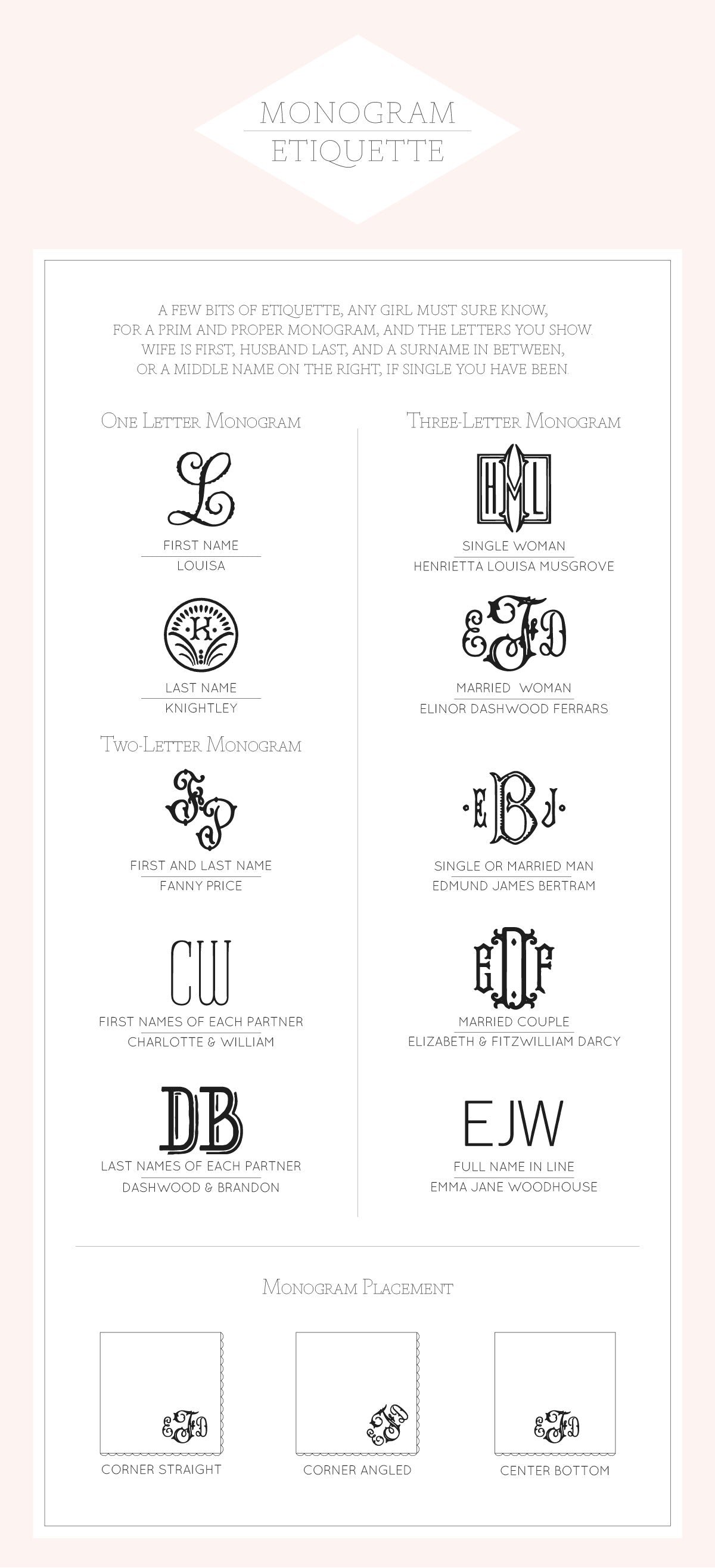
A well-placed monogram is more than just initials; it's a silent declaration of identity, a touch of personalized luxury, and a nod to timeless elegance. But get it wrong, and it can feel less like a thoughtful touch and more like a jumble of letters. Mastering Monogram Etiquette and Design Principles transforms a simple item into a cherished heirloom or a perfectly personalized gift. It’s about understanding the subtle rules that dictate not just which letters go where, but also how they look and feel, ensuring your initials don't just exist, but truly resonate.
This guide is your authoritative compass, navigating the nuances of initial order, stylistic choices, and strategic placement to help you create monograms that are both correct and captivating.
At a Glance: Your Monogramming Essentials
- What it is: A decorative interweaving of initials used for personalization.
- Key Features: Font style, the precise order of initials, and their relative sizes.
- Single-Letter Monogram: Typically the first letter of the last name, or the first name.
- Individual's Three-Letter Monogram:
- Center-Larger: First name, Last name (larger, centered), Middle name.
- All Same Size: First name, Middle name, Last name.
- Couples' Three-Letter Monogram:
- Shared Last Name: Partner 1's first name, Shared Last name (larger, centered), Partner 2's first name.
- Different Last Names: Often just the two last name initials, same size.
- Design Focus: Choose clear, elegant fonts; balance letter sizing; select complementary colors; and place thoughtfully to enhance the item.
- Purpose: Monograms add a unique, personal touch, elevate perceived value, and make gifts memorable.
Decoding the Monogram: What It Is (and Isn't)
At its heart, a monogram is a personalized emblem. It's a logo, a form of identification, typically interweaving someone's initials for decorative purposes. From the regal seals of monarchs to the embroidered cuffs of a custom shirt, monograms have historically served as a distinctive mark of ownership, identity, and status.
Today, their appeal lies in their ability to inject personality and sophistication into almost any item. Think of a monogram not just as text, but as a miniature piece of art that reflects careful thought. The elegance of a monogram often hinges on three key features: the chosen font style, the precise order of the initials, and the relative size of each letter. Neglecting any of these elements can diminish its impact, turning a potential statement into a simple inscription.
The Golden Rules of Initial Order: Your Monogramming Blueprint
The most common questions about monograms revolve around which initials to use and in what sequence. These rules are less about rigid tradition and more about ensuring clarity and respect for the individual or couple being represented.
Single-Letter Monograms: Simple Elegance
When opting for a single initial, the choice is delightfully straightforward, yet still carries a touch of tradition.
- Traditionally, the Last Name: The most classic approach is to use the first letter of the last name (surname). This choice often appears on items meant for general household use or those with a timeless, family-centric feel.
- First Name or Preferred Name: Alternatively, you can use the first letter of the first name. This is particularly popular for children's items or when the monogram is meant to represent a personal, individual connection. Some people might even opt for the initial of a preferred nickname.
Ultimately, for a single letter, the actionable insight is simple: consider the recipient's preference. If it’s for yourself, choose what resonates most. If it’s a gift, a quick, discreet inquiry can save you from a misstep.
Three-Letter Monograms: An Individual's Code
The three-letter monogram is where most of the etiquette lies, offering a beautiful way to represent a full name. The order largely depends on whether all letters are the same size or if the center letter commands more attention.
When the Center Letter Dominates
This is arguably the most recognizable and traditional three-letter monogram style, especially for individuals. It features the last name initial prominently in the center, rendered larger than the flanking initials.
- Order: First Name Initial, Last Name Initial (larger, centered), Middle Name Initial.
- Example: For "Jane Alice Smith," the monogram would be JSA.
- Why it works: The oversized last name initial immediately identifies the family, while the first and middle initials add personal specificity. It's a classic for a reason, projecting a sense of heritage and formality.
When All Letters Stand Equal
A more contemporary or sometimes more formal choice is a three-letter monogram where all initials are the same size. This style maintains a clean, linear aesthetic.
- Order: First Name Initial, Middle Name Initial, Last Name Initial.
- Example: For "Jane Alice Smith," the monogram would be JAS.
- Why it works: This layout is straightforward and easy to read, often preferred for items where a uniform appearance is desired, such as stationery or executive accessories. It offers a slightly less formal, but equally elegant, feel.
Maiden Names: A Personal Touch
For women who wish to incorporate a maiden name, it can thoughtfully substitute the middle name initial, especially on items acquired before marriage or those meant to reflect personal history.
- Example: For "Jane Elizabeth Smith" (maiden name "Brown"), a monogram might be JBS if she wishes to keep "Brown" as her middle initial.
Couples' Monograms: Uniting Initials
Monograms for couples symbolize unity and shared identity. The rules here adapt to reflect the joining of two individuals, particularly their surnames.
Sharing a Surname: A United Front
This is the most common scenario for married couples. The shared last name takes center stage, uniting the partners' individual identities.
- Order: First Name Initial (Partner 1), Shared Last Name Initial (larger, centered), First Name Initial (Partner 2).
- General Rule: The wife's first initial typically comes first (left), followed by the shared last initial, then the husband's first initial (right). However, modern interpretations often allow for personal preference or alphabetical order.
- Example: For "Jane Smith" and "Robert Smith," the monogram would be JSR.
- Why it works: The central, dominant last name initial clearly indicates the family unit, while the flanking first initials celebrate the individuals within that union.
Different Surnames: Modern Pairings
For couples who choose not to share a last name, a different approach ensures both identities are respected.
- Order: Often uses two initials, which are the first letters of both last names, with all letters the same font size.
- Example: For "Jane Brown" and "Robert Smith," the monogram might be BS or SB, with both letters being the same size.
- Why it works: This avoids any implication of a shared surname that doesn't exist while still celebrating the partnership through a combined initial set. Sometimes, a joint first initial monogram (e.g., JR if they are Jane and Robert) is also used, but the last initial approach is more common for items like towels or shared household goods.
Beyond the Order: Crafting Your Monogram's Look and Feel
Once you've decided on the initial order, the real artistry begins. The visual design of your monogram—from the choice of font to its placement—is crucial for its overall impact. A balanced, simple, and uncluttered design always leads to a polished appearance.
Choosing Your Font: The Voice of Your Monogram
The font you select dictates the personality of your monogram. It's the first design decision that speaks volumes.
- Clarity and Elegance are Key: Always prioritize clear, elegant, and refined styles. The font should match the item's purpose and the recipient's style.
- Timeless Serifs: For a classic, traditional, or formal look, choose serif fonts. Their small decorative strokes convey heritage and gravitas. Think of a distinguished family crest.
- Graceful Scripts: Script fonts offer a touch of romance, fluidity, and personal flair. They are perfect for items that lean towards the elegant, feminine, or celebratory.
- Clean Sans-Serifs: For a more modern, minimalist, or masculine aesthetic, sans-serif fonts (without the decorative strokes) provide clean lines and a contemporary feel.
- Avoid Overly Casual or Decorative: For formal gifts or heirloom pieces, steer clear of excessively trendy, playful, or hard-to-read fonts. The goal is enduring beauty, not fleeting fashion.
Sizing Up Your Initials: Balance and Emphasis
Letter sizing goes hand-in-hand with initial order. It's about creating visual harmony and hierarchy.
- Option 1: All Letters Same Size: This creates a uniform, balanced look, often favored for modern designs or when all initials are meant to hold equal weight. It’s clean and understated.
- Option 2: Centered Last Name Larger: This traditional approach, as discussed, emphasizes the family name. It's excellent for formal or family-oriented items and provides a strong focal point.
Regardless of the option, ensure the chosen sizing is proportionate to the item being monogrammed. A monogram shouldn't look cramped or lost, but rather should complement the canvas.
Color Psychology: Weaving in Meaning
Color adds another layer of sophistication and personal expression to your monogram.
- Complementary Hues: Select colors that harmonize with each other and, crucially, with the item's design or the recipient's personal palette.
- Formal Elegance: For formal gifts or timeless pieces, classic monochromes (like tone-on-tone embroidery) or subtle, muted shades are always a safe bet. Black and white schemes offer unparalleled timeless elegance.
- Symbolic Choices: Traditional color combinations often carry inherent symbolism. Gold suggests luxury and prestige, silver hints at modernity and grace, while blue can convey trust and serenity. Consider what message the colors might subtly send.
- Contrast is Crucial: Ensure enough contrast between the monogram and the background material so it stands out without being garish.
Strategic Placement: Where Your Monogram Lives
The location of your monogram can make or break its impact. It should enhance, not overpower, the item.
- Consider Purpose and Item Shape: Think about how the item will be used and its natural contours.
- Formal vs. Personal:
- Formal: Often calls for a discreet, elegant placement. On napkins or handkerchiefs, a corner or subtle centering is customary.
- Personal: Allows for larger, more prominent displays, such as on beach towels, luggage, or casual tote bags.
- Specific Examples:
- Jewelry: Often subtly placed on the front, a clasp, or an inner surface.
- Stationery: Centered at the top, or upper left for a more modern feel.
- Clothing: Typically on the left chest for shirts, or cuffs for a refined touch.
- Home Decor: On pillowcases, at the top center or a corner; on towels, typically centered on one end. For luggage, the front or a prominent side panel.
- Glassware: Engraved discreetly on the front or base.
When in doubt, aim for a location that feels balanced and allows the monogram to be appreciated without being intrusive.
When and Why to Monogram: Elevating the Everyday (and the Special)
Monogramming isn't just about following rules; it's about adding meaning and value. The purpose behind a monogrammed item transforms it from generic to genuinely cherished.
Thoughtful Gifting: The Power of Personalization
There's a reason personalized gifts resonate so deeply. As mentioned, a remarkable 78% of people appreciate personalized gifts, finding them more thoughtful and memorable. A monogram signals that you've put extra effort into selecting and customizing something specifically for them. It elevates the perceived value, not just monetarily, but emotionally.
- Weddings & Anniversaries: A couple's monogram on linens, glassware (like elegant wine glasses), or serving ware makes for a timeless and meaningful gift, celebrating their shared journey.
- Birthdays & Graduations: Individual monograms on robes, wallets, or jewelry (necklaces, rings) mark personal milestones with a sense of lasting distinction.
- Housewarmings: Monogrammed hand towels, throw pillows, or even cutting boards add immediate character and warmth to a new home.
A monogrammed gift isn't just something they'll use; it's something they'll cherish, a constant reminder of a special moment and a thoughtful giver. If you're looking for inspiration, consider using a free 3-initial monogram generator to play with designs and visualize how initials can come to life.
Everyday Elegance: Items That Shine with Initials
Beyond gifts, monograms infuse everyday items with a touch of personal luxury, transforming the mundane into the magnificent.
- Linens: From bath towels to bed sheets, a monogram turns functional items into bespoke pieces. Imagine stepping out of the shower and wrapping yourself in a plush, monogrammed robe – it’s a small detail that makes a big difference.
- Accessories: Purses, tote bags, and luggage become unmistakably yours, adding a chic, organized element to your personal style.
- Stationery: Personal letterhead or thank-you notes with a subtly embossed monogram elevate every correspondence.
These items become an extension of your personal brand, showcasing attention to detail and a refined aesthetic.
Common Monogramming Quandaries & Quick Answers
Even with the rules laid out, specific situations can spark questions. Here are some common ones:
- What if someone doesn't have a middle name?
Simply use their first and last name initials. If using the three-letter, center-larger style, the first name initial (left), last name initial (larger, centered), and a blank space (or a decorative dot/design) can be used, but more commonly, the "all same size" F-L monogram is chosen, or just the single last name initial. - Can children have monograms?
Absolutely! Monogrammed blankets, clothing, and toys make wonderful baby shower or birthday gifts. Follow the same individual rules: either the single last name initial or the FML (all same size) or FLM (center larger) order. - Is it okay to use a married name before the wedding?
Generally, it's best to wait until after the wedding, especially for traditional items. However, some couples choose to use the future shared initial on informal items or during engagement parties. For more formal pieces, err on the side of tradition. - What about business monograms?
For businesses, initials are often combined into a logo following graphic design principles rather than traditional etiquette. The focus is on branding and recognition, sometimes using a sans-serif font for a modern, professional look. - Are there cultural variations I should know about?
Yes. While the Western tradition outlined here is prevalent, monogram styles, initial order, and incorporated symbols can differ across cultures due to local customs and traditions. For instance, some cultures might place more emphasis on family crests or symbols than individual initials. When gifting internationally, a quick check of local customs can be a thoughtful gesture.
Designing with Purpose: Final Thoughts for Your Next Monogram
A beautifully executed monogram is a testament to thoughtful design and respect for tradition, while also embracing modern aesthetics. It's a powerful tool for personalization, capable of turning an ordinary item into something extraordinary.
As you embark on your next monogramming project, remember these core principles:
- Prioritize the Recipient: Their name, style, and preferences should guide your initial order and design choices.
- Embrace Clarity: The chosen initials should be clear and legible, enhancing the item rather than creating confusion.
- Seek Balance: A well-designed monogram feels harmonious, with appropriate font, sizing, and placement.
- Keep it Simple: Often, the most elegant monograms are those that are uncluttered and refined.
By applying these etiquette guidelines and design principles, you're not just adding letters; you're crafting a unique signature that will be admired and cherished for years to come. Go forth and personalize with confidence and style!