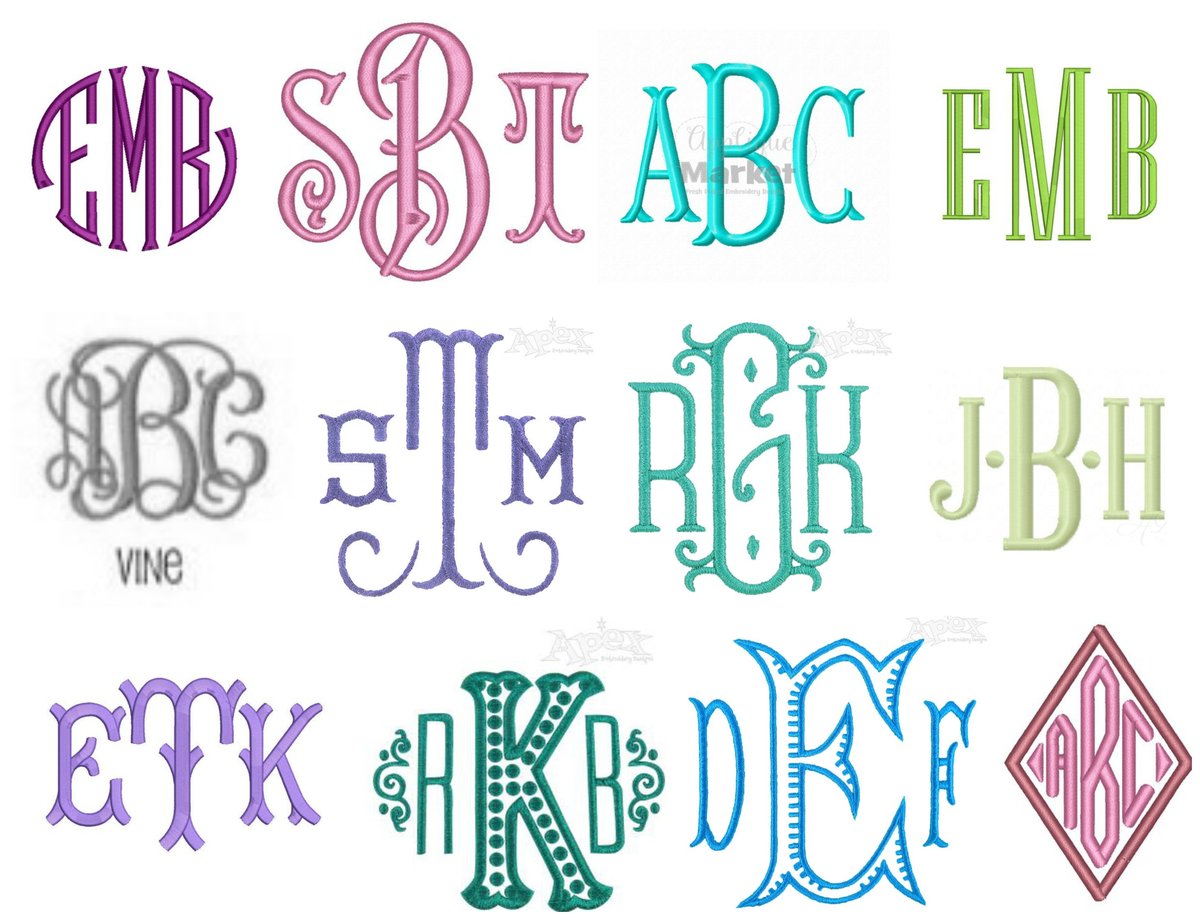
When you see a beautifully crafted piece—a crisp linen napkin, a gleaming silver locket, or a sturdy leather journal—adorned with three elegant letters, it's more than just initials. It's a statement. A story. A whisper of identity, tradition, or shared commitment. These are the Types and Styles of 3-Initial Monograms, and understanding them is the key to unlocking the perfect personalized gift, whether you’re celebrating a wedding, a milestone birthday, or simply wanting to make something uniquely yours.
Far from being a dusty relic, the art of the monogram is experiencing a vibrant renaissance, evolving beyond formal script into bold, modern designs that speak to every aesthetic. But with so many options, how do you choose the right one? How do you ensure the initials are in the correct order, or that the style truly reflects the recipient? Let’s demystify the magic of three-letter monograms.
At a Glance: Your 3-Initial Monogram Playbook
- What it is: A typography design connecting initials, often with decorative elements, telling a personal story.
- Why 3 is popular: Offers a balanced, complete composition for names (First, Middle, Last) or couples (First, Last, First).
- Initial Order Matters: Varies significantly for individuals vs. couples.
- Two Main Sizing Styles: "Block" (all same size) or "Center Initial Larger" (middle letter stands out).
- Style Spectrum: From traditional curly scripts to modern graphic designs, suiting different tastes and items.
- Versatile Gifts: Perfect for weddings, birthdays, anniversaries, Mother's Day, across countless products like jewelry, linens, and tech.
- Application: Techniques like embroidery, engraving, or digital printing bring monograms to life on various materials.
What Exactly Is a Monogram, Anyway? (And Why Three Initials Reign Supreme)
At its heart, a monogram is a piece of art that fuses letters into a single, cohesive design. Imagine a tiny, intricate logo, but instead of representing a brand, it represents you, your family, or a special bond. Traditionally, monograms often featured flowy, cursive fonts, their letters intertwining like vines in a secret garden. Today, however, they’ve exploded into a dazzling array of bold, modern, and graphic styles, each a unique piece of calligraphy artwork.
While monograms can feature one, two, or even more letters, the three-initial monogram stands out as the undisputed champion for its inherent balance and versatility. It offers enough space to tell a rich story—be it a person's full name (First, Middle, Last), the joining of two lives, or a combination of family members. This harmonious composition is why it’s so often the go-to for personalized gifts, transforming everyday objects into cherished heirlooms. Understanding the subtle nuances of these designs is truly a journey into the fascinating history of monograms.
Cracking the Code: How to Order Your Initials for a 3-Letter Monogram
The most common question about 3-initial monograms isn't about style, but about order. Get this right, and you've laid the perfect foundation. Get it wrong, and your personalized gift might just be... well, personalized incorrectly.
For the Individual: Your Personal 3-Initial Monogram
When you're creating a monogram for a single person, the arrangement of initials hinges primarily on the design style chosen. There are two main approaches here:
- The "Block" Style (All Same Size): First, Middle, Last
If all three letters in your monogram are the same height and width – a "block" style – the order is straightforward:
- First Name Initial
- Middle Name Initial
- Last Name Initial
This is a clean, classic, and unambiguous approach, often preferred for men's items or for a universally understood order. For example, John Allen Smith would be "JAS". If a middle name is absent, you might use a second surname (common in Hispanic culture) or opt for a 2-initial monogram instead.
- The "Center Initial Larger" Style: First Name, Last Name, Middle Name
This style, where the center initial is noticeably larger than the two flanking initials, is incredibly popular, especially for women's items. The traditional order for this particular design is:
- First Name Initial (smaller, on the left)
- Last Name Initial (larger, in the center)
- Middle Name Initial (smaller, on the right)
So, for a woman named Sarah Elizabeth Jones, her monogram would be "SJE". This arrangement emphasizes the surname, a nod to a long-standing tradition in personalization. It’s worth noting that while this is the traditional order for this style, personal preference can sometimes lead to variations, but it's always wise to confirm.
For the Power Couple: Crafting a Joint 3-Initial Monogram
Couples monograms are where the art truly shines, symbolizing the union of two people. The arrangement here tells a beautiful story of shared identity.
- Shared Last Name: The Classic Union
This is the most common scenario for newlyweds or couples who share a surname. The formula for a three-initial monogram is elegantly simple and universally understood:
- First Initial of Partner 1 (typically the husband's, if heterosexual, but entirely interchangeable based on preference)
- Shared Last Name Initial (larger, in the center)
- First Initial of Partner 2 (typically the wife's, if heterosexual)
So, if Sarah Jones marries Michael Smith, and they both become Smith, their monogram would be "MS S" (Michael Smith, Sarah Smith). If Michael’s first initial is M and Sarah’s is S, and their shared last name is Jones, the monogram would be “MJS”. This formula applies seamlessly to both husband/wife and same-sex couples sharing one last name, making it a beautiful symbol of their joint identity.
- Hyphenated Last Names:
When a couple chooses to hyphenate their last names, the monogram options become a little more flexible. You could:
- Use the shared last name initial (e.g., if it's Smith-Jones, use 'S' or 'J', or try to combine them graphically).
- Incorporate a hyphen or ampersand into a two-letter design that combines the first initials of both last names.
For 3-initials, it's common to choose one of the hyphenated surnames as the dominant "shared" initial in the center, or to simplify by using only the first partner's first initial, the shared (or chosen) last initial, and the second partner's first initial, as above. For example, if Sarah Jones marries Michael Smith and they become Smith-Jones, they might choose "MSJ" for Michael Smith-Jones Sarah.
- Two Different Last Names (or Unmarried Couples):
For couples who opt to keep their individual last names, a 3-initial monogram can still work, but a 2-letter monogram often feels more natural. If sticking to three initials:
- You might use the two first initials flanking a significant shared initial (e.g., from a future child's name, or a shared initial from a place or date).
- However, a 2-letter monogram is frequently preferred, combining each of the couple's last name initials (e.g., 'S' for Smith and 'J' for Jones becomes "SJ"). These often include charming props like ampersands (&), plus signs (+), or subtle bars to connect the initials, creating a unique representation of their distinct yet connected identities. These personalized gifts offer a wonderful way to celebrate a union without requiring a shared surname.
The Art of Sizing: Block vs. Center Initial Larger
Beyond the order of initials, the way those initials are sized and arranged visually defines the entire character of your monogram. There are two primary categories here, each with its own aesthetic and traditional uses.
The Classic "Block" Monogram: All Letters Equal
Imagine three letters standing side-by-side, each a pillar of equal height and stature. That's the essence of a block monogram.
- Characteristics: All letters are the same size, creating a uniform, often geometric, and balanced appearance. They can be bold, crisp, or elegantly understated.
- Typical Use: Primarily used for personal monogramming, with the initials ordered First, Middle, Last. Think of a man's dress shirt cuff, a sophisticated briefcase, or a set of personalized stationery. The consistency in sizing lends itself to a strong, traditional, and often masculine aesthetic, though modern block fonts are increasingly popular for everyone. This style is clear, direct, and avoids any ambiguity in initial prominence.
The Distinguished "Center Initial Larger" Monogram: Making a Statement
This is perhaps the most recognizable monogram style, where the middle letter proudly stands taller and wider than the two letters flanking it.
- Characteristics: The central initial commands attention, creating a focal point that draws the eye. This style often has a more ornamental, refined, or "feminine" feel, depending on the font.
- Typical Use: This style is incredibly versatile and can be used for both personal and couples monograms.
- For Personal Monograms (often women's items): The order is typically First name, Last name, Middle name (e.g., S J E for Sarah Elizabeth Jones). This allows the surname to take pride of place. It’s frequently seen on items like women's handbags, delicate jewelry, or plush bath towels.
- For Joint or Couple Monograms: This sizing style is almost always used. The order, as discussed, is First (his), Last (shared), First (hers) (e.g., M J S for Michael & Sarah Jones). The shared surname takes center stage, symbolizing the couple's new or existing bond. This makes it ideal for wedding gifts, anniversary presents, or items for the newly shared home, like decorative pillows or fine glassware.
Choosing between these two styles depends heavily on the recipient, the occasion, and the item itself. Do you want equal emphasis on all initials, or do you want the surname to truly shine?
Beyond the Layout: Exploring Styles and Aesthetics
Once you've decided on the initial order and sizing, the next layer of personalization comes through style and font. This is where a monogram truly transforms from mere letters into an expression of personality.
The Timeless Allure of Traditional Monograms
Traditional monograms are the epitome of classic elegance. They evoke a sense of heritage, romance, and enduring sophistication.
- Characteristics: Think interlocking fonts, curly scripts, and intricate flourishes. These designs often feature ornate borders or delicate intertwining elements that create a continuous, flowing piece of art.
- Best Suited For: Items where grace and tradition are valued.
- Linens: Embroidered on robes, towels, and bedding, they add a luxurious hotel-like touch.
- Kitchenware & Glassware: Engraved on crystal wine glasses or ceramic platters, they become instant heirlooms.
- Formal Stationery: Ideal for wedding invitations or personal letterheads, conveying gravitas and personal touch.
- Examples: Curlz, Princess, Marlow, Royal Medallion, and Scroll Initial are fonts that often lean into this classic aesthetic, offering intricate details and elegant curves.
Embracing Modernity: Contemporary Monogram Designs
Stepping away from the elaborate curls, modern monograms offer a fresh, clean, and often minimalist aesthetic. They resonate with contemporary tastes and design trends.
- Characteristics: Defined by crisp lines, bold geometric shapes, and graphic styles. These monograms might stack initials, use sans-serif fonts, or wrap letters within clean circles or diamond shapes without excessive embellishment. They prioritize clarity and impact.
- Best Suited For: Items that benefit from a contemporary look or are part of a more casual, everyday lifestyle.
- Statement Jewelry: Engraved on sleek pendants or cufflinks, they offer a sophisticated edge.
- Tech Accessories: Phone cases, notebook sleeves, and portable chargers adorned with modern monograms feel chic and current.
- Fashion Accessories: Pouches, tote bags, and even hats get a personalized upgrade.
- Home Décor: Geometric wall art or modern ceramic pieces gain a custom touch.
- Examples: Classic Block, Athletic Brushstroke, Circle Script, Diamond, and specific "Modern Circle" designs (e.g., 3 Initial Modern Circle, 2 Initial Modern Circle with Border) all fall under this umbrella. Fonts like Engraved (ALL CAPS), Fifth Avenue (ALL CAPS), Grayson, Seaside (ALL CAPS), and Southport (ALL CAPS) offer sharp, impactful letterforms. For a truly custom design, you might even consider a guide to choosing the perfect monogram style.
Many styles, like "Circle Seal" or "Cupcake," can bridge the gap, offering elements of both traditional and modern, depending on the specific font and application. Some fonts, such as Fancy, are specifically designed for unique applications like heat press designs, offering even more creative possibilities.
Bringing Your Monogram to Life: Application Techniques & Best Uses
A monogram is only as good as its execution. The technique used to apply the design to a product plays a huge role in its final look, durability, and suitability for the item.
From Stitch to Sparkle: Common Application Methods
The world of personalization offers a technique for almost any material.
- Embroidered: The gold standard for fabric items, embroidery involves stitching the monogram directly onto the material using threads.
- Best for: Robes, linens, towels, bedding, apparel, and fabric accessories. It provides a tactile, high-quality finish.
- Engraving: This method carves the monogram design into the surface of a material, creating a permanent, recessed impression.
- Best for: Glassware, kitchenware (e.g., cutting boards, utensils), jewelry (metal, acrylic), and other hard surfaces. It offers a sophisticated, lasting mark.
- Print-on-Demand (Digital Printing, Sublimation): These modern printing techniques allow for intricate designs and full-color monograms to be applied directly onto various surfaces.
- Best for: Stationery, apparel (t-shirts, hoodies), tech accessories (phone cases, laptop sleeves), and many home décor items where digital artwork is preferred. Offers great versatility in color and detail.
- Hand Stamping: A traditional artisan technique, especially popular for jewelry, where individual metal stamps are used to create the monogram.
- Best for: Jewelry, metal tags, and leather goods. It provides a charming, handmade quality, often with slight imperfections that add character.
- Laser Cutting: Precision lasers cut the monogram design out of a material (like wood, acrylic, or metal) or etch it onto a surface.
- Best for: Jewelry, keychains, wood signs, and custom décor items. Offers very clean lines and intricate detail.
Matching Monograms to Your Moment (and Material)
The right application technique, coupled with the chosen style, ensures your monogrammed gift is a perfect fit.
- For Plush Comfort: A traditional, curly script monogram, beautifully embroidered, is ideal for luxurious robes, bath towels, and fine linen sheets. It adds a touch of classic elegance that feels soft and inviting.
- For Lasting Shine: A classic block or an ornate center-initial-larger monogram, engraved onto sterling silver jewelry, crystal decanters, or polished metal kitchenware, creates a timeless keepsake meant to be treasured for generations.
- For Everyday Chic: A modern, graphic monogram style, perhaps a bold Circle Script or Diamond design, printed-on-demand onto a sleek phone case, a stylish tote bag, or a contemporary art print, injects personalized flair into daily life.
- For Artisan Appeal: A clean block monogram or a subtly hand-stamped initial set on a piece of hand-stamped jewelry or a laser-cut wooden coaster offers a unique, handcrafted feel that appeals to those who appreciate bespoke items.
Thinking about the item's material, its intended use, and the recipient's style will guide you to the perfect pairing of monogram type, style, and application. Don't forget that using a modern monogramming etiquette guide can help ensure your gift is not only beautiful but also culturally appropriate.
Common Questions About 3-Initial Monograms
Let’s tackle some frequently asked questions to ensure you're confident in your monogramming choices.
Can I use just two initials for a 3-initial design?
Generally, no. A 3-initial design is specifically composed for three distinct letters to ensure proper balance and proportion. If a middle name is absent, it's usually best to:
- Use a second surname initial (if applicable, especially in some cultures).
- Opt for a 2-initial monogram instead, which is designed for two letters and looks perfectly complete. For instance, a couple with different last names might choose a 2-letter monogram.
- Consider a single initial monogram, focusing on the last name.
What's the best monogram style for a wedding gift?
For wedding gifts, the "Center Initial Larger" style is almost always the go-to for couples monograms. The shared last name initial takes pride of place in the center, flanked by the couple's first initials (e.g., M S J for Michael & Sarah Jones). As for aesthetic style, traditional interlocking scripts and elegant cursive fonts are highly popular for wedding gifts like linens, glassware, or serving dishes, symbolizing enduring love and tradition. However, a modern block or geometric design can also be stunning for contemporary couples.
How do I decide between block and center-initial-larger?
- Recipient & Item: Consider who it's for and what the item is. "Block" (all same size) is often favored for men, or for a clean, universal look on items like briefcases, stationery, or more utilitarian objects. "Center Initial Larger" (Last name in the middle) is very popular for women's items and is the standard for couples monograms, giving a more ornate and traditional feel.
- Emphasis: Do you want equal emphasis on all initials, or do you want the surname (or shared initial) to be the focal point?
- Personal Preference: Ultimately, it comes down to what you or the recipient prefers visually.
Are monograms only for traditional items?
Absolutely not! While monograms have deep roots in tradition, their application has broadened dramatically. Modern monogram styles, with their clean lines and bold aesthetics, are perfect for contemporary items like tech accessories (phone cases, laptop sleeves), casual apparel, and minimalist home décor. The versatility of different monogram types means there's a style for every taste and every item. The key is to match the monogram's style to the item's aesthetic and the recipient's personal taste.
How do I care for monogrammed items?
Care depends on the application technique and material.
- Embroidered: Follow garment care instructions. Generally, gentle washing and air drying preserve stitching.
- Engraved: Wash according to the item's material (glass, metal, wood). Engraving is permanent and requires no special care.
- Print-on-demand: Follow specific care instructions for printed apparel or accessories to prevent fading or peeling.
- Hand Stamped/Laser Cut: Clean according to the material (e.g., jewelry cleaner for metals).
A general rule of thumb is to handle monogrammed items with a little extra care to preserve the personalized touch, and always check the manufacturer's recommendations. For more specific advice, check out guides on caring for your monogrammed treasures.
Ready to Create Your Own Masterpiece?
From the historical elegance of intertwining scripts to the crisp, bold lines of modern graphics, the world of 3-initial monograms is rich with possibilities. You now have the blueprint: understanding initial order for individuals and couples, discerning between block and center-larger styles, and recognizing how different aesthetic styles and application techniques can transform an ordinary object into a cherished keepsake.
Whether you’re commemorating a milestone, celebrating a union, or simply adding a touch of sophisticated personalization to your own belongings, a thoughtfully chosen 3-initial monogram is more than just a design—it’s a piece of your story, beautifully told. So go ahead, experiment with the possibilities, and craft a personalized gift that truly speaks volumes.
Feeling inspired? You can start designing your own unique blend of letters right now with a Free 3-initial monogram creator and bring your vision to life.